
Protect Upholstery Without Compromising Indoor Comfort
Upholstery works hard every day, from family sofas and dining chairs to vehicle seats and busy reception areas. It also absorbs the signs of daily life quickly, including drink spills, food marks, damp coats, muddy shoes, dust and body oils. We believe protection should make cleaning easier without overlooking the materials used around your indoor spaces.
September often brings wetter weather, back-to-school routines and more people coming through the door. For homes, hospitality settings and workplaces, that can mean more pressure on fabric-covered furniture. PFAS-free protective coatings give you another option to consider when you want a barrier that can help reduce liquid absorption and support simpler day-to-day care.
Why PFAS-Free Protective Coatings Matter for Upholstery
PFAS are a broad group of chemicals that have historically appeared in some water-repellent and stain-resistant treatments. They are often discussed because they can remain in the environment for a long time. As awareness grows, many households and organisations are asking more questions about the chemistry behind the products used on surfaces and fabrics.
PFAS-free protective coatings are designed to support surface protection without intentionally using PFAS chemistry. That does not mean every product will suit every chair, sofa or seat covering. Before any treatment, we recommend asking for clear product information and confirming that it is suitable for the particular fabric in question.
This matters most where upholstery sees frequent use. A protected surface may be helpful in spaces such as:
- Family rooms with children, pets and everyday snack spills
- Office seating that is used throughout the working week
- Hotel lounges, restaurants and waiting areas with regular footfall
- Vehicle interiors exposed to rain, bags, food and daily travel
The aim is not to make fabric invincible. Instead, a suitable coating can support a sensible care plan and give you a little more time to deal with a spill before it settles into the fibres.
Comparing Protection Performance and Daily Maintenance
Both conventional upholstery protectors and PFAS-free protective coatings may help with familiar issues, including drinks, food marks, dust, light soiling and general wear. The real difference is not simply whether a product is labelled “protective”. It is how well it suits the fabric, how it is applied and how the upholstery is cared for afterwards.
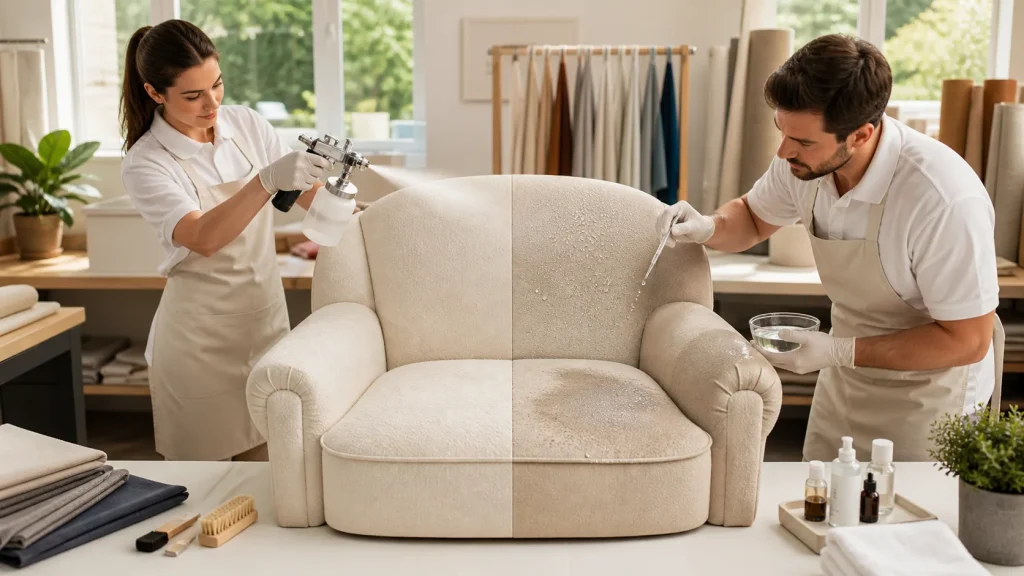
On compatible materials, a protective treatment can allow liquid to bead on the surface for a short time rather than soaking in straight away. That extra moment can make prompt blotting easier and may reduce the chance of deeper penetration. It is still important to act quickly, use approved cleaning methods and avoid rubbing a spill further into the fabric.
Results can vary widely. We look at several practical factors before recommending a route:
- Fibre type, weave and the age of the upholstery
- Fabric colour and whether the surface has previous treatments
- The quality and consistency of the coating application
- How quickly spills and marks are dealt with
- The level of daily use, friction and cleaning
No coating can promise permanent stain-proofing. A pale, loosely woven fabric in a busy café will face a different challenge from a dark synthetic vehicle seat. Clear expectations, quick spill response and regular cleaning make a larger difference than any single product claim.
Choosing the Right Coating for Each Fabric Type
One upholstery label rarely tells the whole story. Natural fibres, synthetics, blended textiles, suede-like finishes and delicate fabrics can all respond differently to protective treatments. Some materials may absorb a coating readily, while others need a more cautious approach to protect their original feel and appearance.
A fabric compatibility test in a hidden area should always come first. This helps us check for unwanted changes before treatment is considered across the full item. Colour, softness, texture and breathability all matter, particularly on furniture that people sit on for long periods.
The setting should shape the choice as well. When we assess upholstery, we consider how it is used rather than treating every fabric as if it faces the same risks. For example, you may need to weigh up:
- A family sofa that needs support against snacks, pets and damp clothing
- A hotel lounge chair that needs regular cleaning between guests
- An office workstation seat that sees steady daily use
- A car interior that must cope with rain, bags and on-the-go spills
A suitable treatment should help preserve the intended look and comfort of the material when correctly applied. If the fabric is particularly delicate, already damaged or marked by old stains, professional assessment is the safer starting point.
Prepare High-Use Upholstery for Autumn Demands
Autumn puts fabric surfaces through more than a normal week of use. Rainy days bring damp outerwear, indoor gatherings create more chances for drink spills, and hospitality or commercial spaces can face heavier cleaning demands. Planning ahead is often easier than trying to rescue a stain once it has dried.
PFAS-free protective coatings can sit within a wider upholstery care routine. We see the best approach as a combination of suitable protection, frequent vacuuming, prompt spill attention, manufacturer-approved cleaning products and planned professional maintenance. Coating a surface does not replace cleaning, but it may make routine care more manageable on the right fabric.
Use this simple checklist before arranging treatment:
- Identify sofas, chairs and vehicle seats that receive the heaviest use
- Check fabric care labels and note any existing treatments or repairs
- Assess current stains, fading, wear or damage that may need attention first
- Arrange a compatibility test in a discreet area
- Set a clear spill-response process for household members or staff
That last point is easy to overlook. People should know to blot rather than scrub, avoid using random cleaners and report significant spills promptly. A straightforward response can help protect both the upholstery and the value of any professional treatment.
Make a Smarter Choice for Protected Upholstery
The best upholstery protection balances practical performance with responsible material choices. PFAS-free protective coatings may be a considered alternative when you want water-repellent and surface-protection benefits for suitable household, commercial or vehicle fabrics. Still, the right choice depends on the textile, the amount of use it gets and the cleaning challenges it faces.
Correct application, fabric testing and ongoing maintenance remain the foundation of good results. By understanding what your upholstery is made from and preparing for the messes it is most likely to meet, you can choose protection that supports comfort, appearance and everyday care.
Confident Protection for Everyday Upholstery
Choose PFAS-free protective coatings designed to help upholstery resist everyday spills without compromising its feel. At Nanoman, we offer practical fabric protection suited to the demands of busy homes and commercial spaces. If you would like guidance on selecting the right solution, contact us to speak with our team.

