
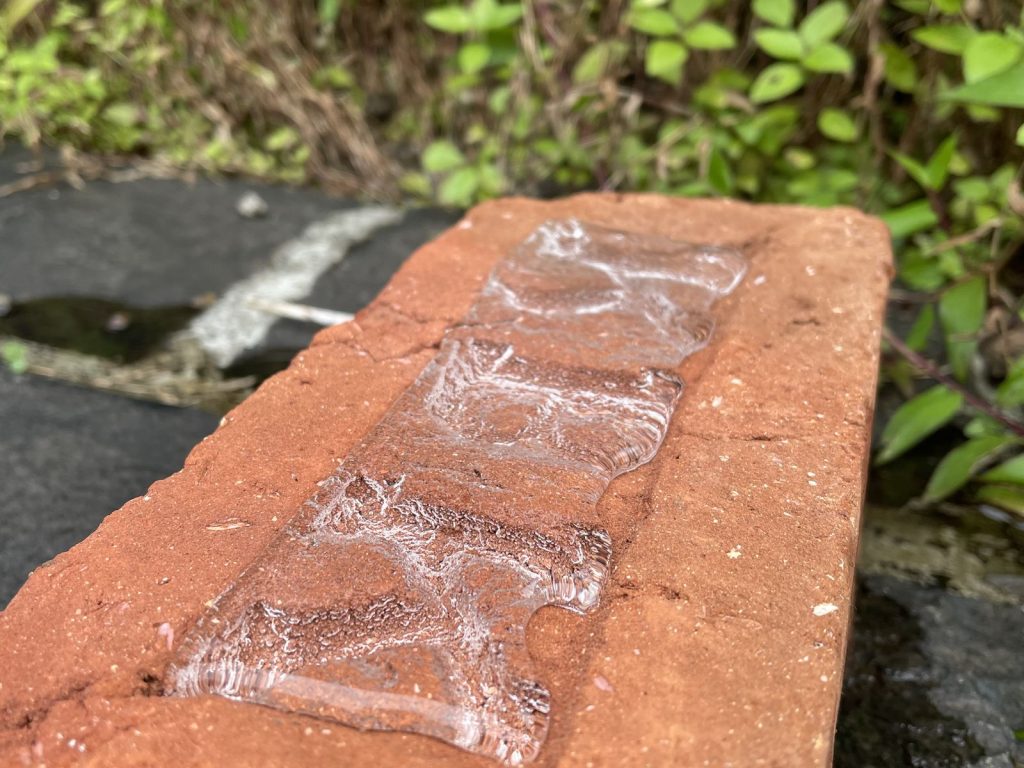
Brick, sandstone, concrete and render all drink water. In the monsoon they soak it up, then dry slowly, leaving damp patches, moss, black staining and white salt bloom. Over years, water carrying dirt and salts into the pores is what makes walls and façades look old.
A penetrating nano sealer keeps liquid water out of those pores without sealing the surface shut. This guide explains how it works, which surfaces it suits, how it is applied, and how long it lasts outdoors.
Key takeaways
- A penetrating sealer lines the pores with water-repelling groups; it forms no film on the surface.
- Rain beads off, while water vapour can still escape, so damp is not trapped behind the surface.
- It does not change the look of the stone or make it slippery.
- Expect up to 5 years outdoors, depending on exposure.
Penetrating versus film-forming sealers
| Penetrating (Stone + Brick) | Film-forming (acrylics, varnishes) | |
|---|---|---|
| Where it works | Inside the pores | On the surface |
| Look | Unchanged, natural | Often glossy or darker |
| Breathability | Vapour escapes | Can trap moisture |
| Slip | No change | Can become slippery |
| Failure mode | Gradually stops repelling; re-apply | Peels or flakes; must be stripped |
How it works
The active ingredients soak into the capillary pores and bond to the mineral walls, lining them with water-repelling groups. Liquid water, and the dirt and salts it carries, are kept out. Water vapour can still pass through, which is what stops damp from being trapped behind the surface and pushing the finish off from inside.
Surfaces it suits
- Brick, concrete, render and pavers
- Sandstone, limestone, travertine, granite and honed marble
- Unglazed tiles, terracotta and grout
- Walls, façades, driveways, patios and pool surrounds
It is not for glazed tiles or glass (use Glass + Ceramic), surfaces with an existing sealer or curing compound, below-ground waterproofing, or concrete less than 28 days old.
Efflorescence and monsoon damp
White salt bloom (efflorescence) appears when water moving through masonry carries dissolved salts to the surface, then evaporates. Keeping rain out of the pores cuts the amount of water moving through the wall, so less salt is carried to the surface. Remove existing efflorescence before sealing.
How it is applied
- Clean off dirt, oil, efflorescence, moss and old coatings, then rinse. Let the surface dry for at least 24 to 48 hours.
- Water test: sprinkle water on the surface. If it darkens and soaks in, it is ready. If it beads, an old sealer must be removed first.
- Dilute 1 part concentrate with 19 to 39 parts deionised water (1:19 to 1:39).
- Apply liberally by low-pressure sprayer, brush or roller until the surface looks evenly wet. One coat only.
- On dense or polished stone, wipe off surplus within 10 to 15 minutes.
- Keep foot traffic off for 6 hours and keep dry for 24 hours. Full performance develops over about 5 days.
Coverage is 70 to 100 ml of diluted product per square metre, more on very porous stone. Work at 5 to 35 °C with no rain expected for 12 hours.
Care and re-application
- Clean with water, a soft brush or a low-pressure hose; use a pH-neutral cleaner for stubborn marks.
- Avoid acids, bleach and high-pressure cleaning close to the surface.
- Re-apply when water starts soaking in again. Up to 5 years outdoors, less on heavily trafficked floors.
Frequently asked questions
Will a stone sealer change the colour of my brick or stone?
No. It works inside the pores and forms no film, so the surface keeps its natural look and texture.
Does it make floors slippery?
No. Because nothing is left on the surface, slip resistance does not change.
Can it stop rising damp?
No. It keeps rain out of the face of the wall. It is not below-ground waterproofing and does not stop water under pressure.
How long does it last outdoors?
Up to 5 years depending on exposure. Heavily trafficked floors need re-applying sooner.
Sealing walls, façades or paving on a project? Stone + Brick is supplied as a concentrate. Tell us the material and area.