
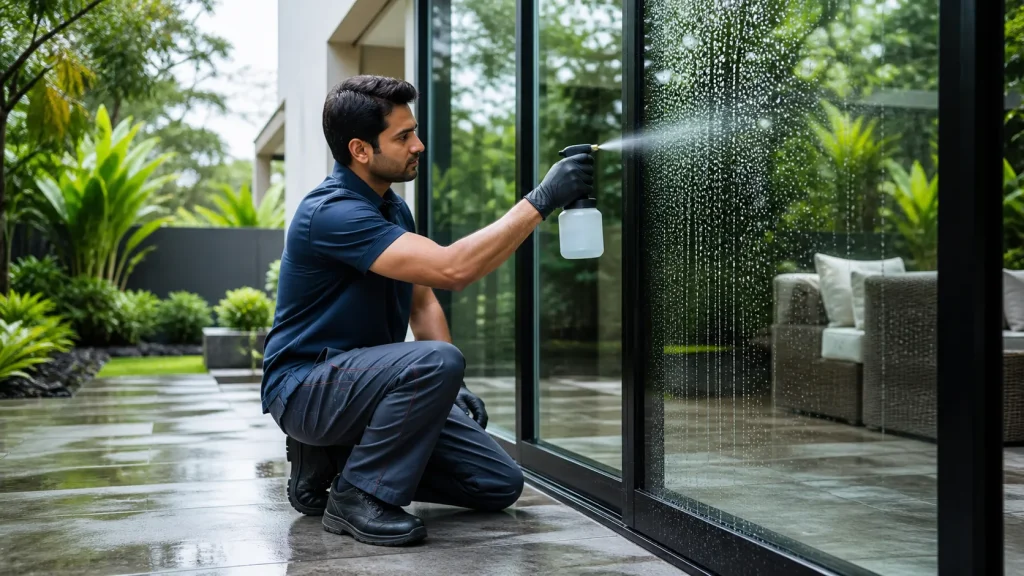
Post-monsoon home maintenance is about more than making things look tidy again. Once the rain eases, it is the right time to clean away residue, check for dampness, and deal with small surface problems before the drier months expose bigger ones.
Across Indian homes, weeks of humidity, muddy splashback and airborne pollution can leave their mark. We recommend treating this period as a reset for the surfaces that protect, brighten and support your everyday living spaces.
Restore Your Home After Monsoon Moisture
Rainwater does not always dry cleanly. It can leave mineral marks on windows, grime on balcony doors, and dark patches on stone or tiles. Damp corners may also encourage algae, mould and lingering odours, especially where sunlight and airflow are limited.
Start by looking at the places that received the most weather exposure, as well as rooms where water is used every day. Entrances, terraces, garden paths, bathrooms, kitchens and shaded exterior walls often need attention first.
A sensible post-monsoon plan combines cleaning, complete drying, needed repairs and suitable surface protection. Each step has its place. Protective treatments can support cleaner surfaces, but they should never be used to hide active leaks, loose tiles, cracks or wall dampness.
Spot Post-Monsoon Damage Before It Spreads
A quick walk through your home can reveal plenty. We suggest checking indoors and outdoors with fresh eyes, rather than assuming every stain is only dirt. Some marks are surface-level residue, while others point to water getting where it should not.
Keep an eye out for:
- Water spots and cloudy marks on windows, shower partitions and glass railings
- Green growth, mud stains or slippery patches on stone pathways and balcony floors
- Rust marks around gates, grills, outdoor furniture and metal fittings
- Damp patches near windows, ceilings or wall joints
- Dust and grime sitting on solar panels
- Musty smells in curtains, cushions, stored fabrics or car covers
Persistent dampness deserves proper attention. Leaking joints, damaged sealants, blocked drainage channels, cracked tiles and electrical concerns should be assessed and repaired by suitable professionals. Cleaning over the problem may improve the look for a short while, but it does not solve the cause.
A simple checklist helps bring order to the work. List balconies, driveways, windows, gates, outdoor furniture, bathroom fittings and frequently touched surfaces, then mark each one for cleaning, repair or protection. This makes it easier to deal with high-exposure areas first.
Choose Nano Coating for Vulnerable Surfaces
Nano coating can be a useful part of post-monsoon maintenance when it is matched to the right material. These protective coatings are designed to reduce the attachment of water, dirt, stains and contaminants on suitable surfaces. The goal is not to make cleaning disappear, but to make regular care more manageable.
We encourage material-specific selection because glass, natural stone, tile, metal, fabric and solar panels all have different needs. Compatibility should always be checked before a coating is applied, particularly on delicate, polished, painted or previously treated surfaces.
After the monsoon, many households want surfaces that are easier to clean and less likely to show water spotting or built-up dirt. A suitable nano coating may also support stain resistance and help rooms and outdoor areas keep a neater appearance through festive gatherings and the cooler season.
Preparation comes first. Before any protective treatment, the surface needs thorough cleaning and enough time to dry completely. Existing grime, loose paint, active mould, cracks and moisture issues should be addressed before coating work begins.
Prepare Glass, Stone, Metal and Fabric Properly
Different materials call for different care. A harsh cleaner or rough scrubber might remove grime quickly, yet it can also affect a finish or leave scratches behind. We recommend professional guidance for cleaning and treatment choices, especially where the material is expensive, delicate or hard to replace.
Glass often needs attention after long spells of rain. Windows, shower screens, balcony doors and exterior glass railings can collect dust, rain marks and mineral residue. Non-abrasive cleaning methods are better suited to restoring a clear finish without damaging the surface.
Stone and tiled areas can hold algae, mud and embedded dirt in small pores or grout lines. Pathways, patios, balconies, driveways and bathroom floors should be cleaned with products appropriate for their material. Strong chemicals may affect the finish of certain stone surfaces, so a one-product approach is rarely wise.
Metal and fabric need a close inspection too. Gates, grills, appliances and outdoor furniture may show early rust or trapped moisture. Curtains, cushions, upholstered seating and car covers can carry stains, mould or a damp smell. These items should be properly cleaned and fully dried before storage or protective treatment.
Build a Lasting Post-Monsoon Protection Routine
One thorough clean in October gives your home a strong starting point, but surface care works best as an ongoing routine. Exposure varies from home to home. Coastal air, pollution, heavy household use, nearby trees and shaded spaces can all affect how often a surface needs attention.
For a practical schedule, we suggest:
- Complete a deeper clean once the monsoon has eased
- Inspect high-exposure areas each month
- Carry out lighter cleaning when residue starts to build up
- Keep drains and water outlets clear so water does not sit for long periods
- Review protective surfaces according to their material and exposure
Gentle routine care helps maintain coated surfaces. Avoid abrasive pads and unsuitable chemicals, and do not overlook drainage areas. Standing water and trapped grime can undo the benefit of even a well-prepared protective surface.
Start with spaces that see the most hands, water, weather and daily activity. Kitchen glass, bathroom fixtures, balcony flooring, exterior windows, solar panels, fabric seating and metal gates are sensible priorities. Protection can then be extended to other suitable surfaces over time.
Protect Your Home Before the Next Downpour
The weeks after the monsoon offer a useful window to clean, dry and assess your home properly. Acting early can help stop residue, moisture and surface staining from becoming harder to manage later. A tailored plan should consider your home’s glass, stone, metal, fabric, solar and high-touch surfaces, along with the amount of rain, pollution and everyday use they face.
A cleaner, drier surface is the right base for any long-term protection routine. By repairing active problems first and selecting compatible treatments carefully, you can keep your home ready for the next change in weather.
Strengthen Your Home’s Surface Protection
At Nanoman, we can help you choose a nano coating suited to the surfaces you want to protect. Our team will help you understand the right application and care approach for lasting results. If you would like tailored guidance, contact us to discuss your home maintenance needs.

