
Why Dust Buildup Reduces Solar Panel Output so Quickly
Solar panels need clear, direct sunlight to produce electricity. When dust settles on the glass, it forms a barrier between the sun and the photovoltaic cells below. Even a light coating can reduce the amount of usable light reaching the panel, which means your system may produce less power than expected.
At Nanoman, we often encourage solar owners to treat surface cleanliness as part of energy performance, not just appearance. Dust can build up slowly enough to go unnoticed, then show up later as lower generation figures, missed output expectations or a system that seems less productive on bright days.
Capture More Solar Energy From Every Sunny Day
A clean solar panel has the best chance of receiving available sunlight. Dust, pollen, soot, sand and fine debris can scatter, reflect or absorb light before it reaches the solar cells. Less light reaching those cells means less electricity can be generated.
The problem is not always obvious from ground level. Panels may look reasonably clean while still carrying a thin film of grime that affects performance. We commonly advise paying closer attention when a system is exposed to:
- Dry roads and regular vehicle traffic
- Nearby construction activity
- Farms, open land or airborne soil
- Industrial pollution or smoke residue
- Coastal winds carrying salt and fine sand
Uneven dirt can cause more trouble than an even layer. A few leaves, bird droppings or patches of dust may block part of a panel while the rest remains clear. This localised soiling can act like partial shading across groups of cells, affecting how the module performs as a whole.
Daily dust deposition can become meaningful between scheduled cleans, especially on exposed rooftops. Rather than waiting until panels look heavily soiled, we recommend watching for early signs that sunlight is not reaching the glass as freely as it should.
Heat and Humidity Make Soiling More Damaging
Dust does more than block light. Dark particles can absorb heat from the sun, adding to the heat already building on the panel surface. Solar panels generally work less efficiently when they become hotter, so a dirty surface and high temperatures can work together to reduce output.
Moisture can also make the situation harder to manage. Dew, light rain and humid air may cause dust to stick firmly to the glass. Once that mixture dries, it can leave behind water marks, mineral residue and stubborn grime that does not simply blow away in the wind.
September is a useful time for a post-monsoon inspection in many parts of India. Rain may have removed some loose dust, but it can also leave pollution residue, leaf matter and dried marks behind. As drier conditions return, fresh dust can settle over those stuck-on deposits and create a thicker layer over time.
A careful inspection can reveal issues that are easy to miss, including:
- Dried water marks near the lower edge of panels
- Dust collecting around frames and corners
- Leaves or organic matter trapped in one area
- Bird droppings creating small shaded spots
- Grime that remains after rainfall
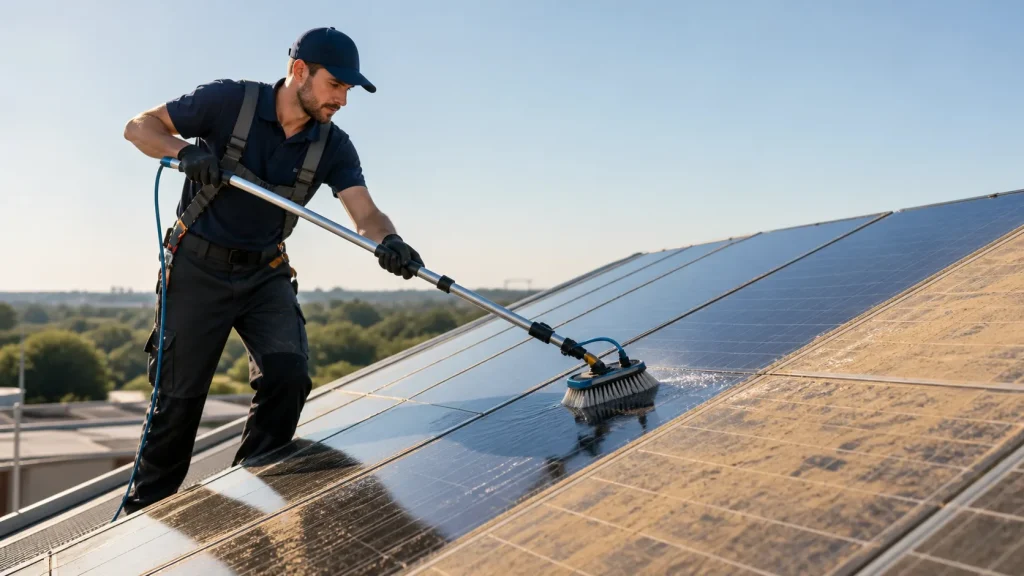
We recommend professional cleaning and inspection where panels are difficult to access or where dirt has hardened onto the surface. Safe care matters, since incorrect cleaning methods can create avoidable surface issues.
How Solar Nano Coating Helps Keep Panels Clear
A solar nano coating is a protective surface treatment designed to improve the behaviour of a solar panel’s glass surface. The aim is not to make panels maintenance-free. Instead, the right treatment can help reduce how strongly dust and grime cling to the glass, supporting easier ongoing care.
When loose contaminants do not hold as tightly, rainwater or routine professional cleaning may remove them more effectively. This can be useful in locations where panels face repeated exposure to fine dust, pollution particles or airborne debris. The result depends on the coating’s verified properties, the condition of the panel surface and the environment around the installation.
Our approach at Nanoman is to view solar nano coating as one layer of a wider protection plan. Its suitability should be assessed alongside the panel type, installation angle, local climate, nearby pollution sources and the cleaning method used. A flat panel near a dusty road, for example, may face very different soiling patterns from a steeply angled installation in a cleaner area.
Protective coatings can support easier maintenance, but they do not replace regular checks. Leaves, bird droppings and heavy deposits can still land on any panel, and they should be dealt with through safe, appropriate servicing.
Plan Cleaning Around Local Weather and Site Risks
A fixed cleaning timetable does not suit every solar system. Some panels remain relatively clear for long periods, while others collect dust quickly because of their surroundings. We recommend basing inspection and maintenance plans on what is happening at your site, rather than relying only on the calendar.
Generation monitoring is one of the best early warning tools. If output falls when the weather is otherwise favourable, it may be time to look for surface soiling. At the same time, we encourage checking other possible causes, such as cloud cover, new shading, seasonal changes or equipment concerns.
Sites that may need closer attention include those near:
- Factories or industrial facilities
- Agricultural land and dusty open areas
- Busy roads and transport routes
- Construction zones
- Coastal locations with windblown residue
Professional servicing can help distinguish ordinary dirt buildup from more stubborn surface contamination. Regular visual checks, safe cleaning and a review of production patterns give you a clearer picture of how well your panels are receiving sunlight.
Protect Your Solar Yield Before Soiling Builds
Dust control should be treated as an energy-performance priority. A thin layer can reduce available sunlight, uneven deposits can create partial shading and stuck-on grime can add to heat-related efficiency loss. Checking panels after the monsoon and before drier, dustier conditions become established can help catch these issues early.
A practical care plan combines monitoring, inspections, safe professional cleaning and protective measures such as a suitable solar nano coating. By responding before dirt becomes heavily bonded to the glass, you can support steadier solar output and reduce avoidable maintenance effort over the life of your system.
Help Protect Solar Panel Performance
At Nanoman, we can help you select a solar nano-coating designed to make panel glass easier to maintain. Our coating solution supports cleaner surfaces while allowing light to reach the cells effectively. For guidance tailored to your solar system, contact us today.

